
You have probably done it by now. You typed "warm minimalist kitchen with an arched window and a stone island" into one of the AI image tools, and ten seconds later you got something gorgeous. Maybe you made forty of them! So the question we get asked a lot lately is: do I still need a designer?
The honest answer is yes, and no, and also both. Let me explain, because we use AI in our studio too and we love it for what it is good at. The trick is knowing what that is.
Why Use AI
It is fast. Really fast. You can go from "I think I like plaster walls" to a whole room in the time it takes to make a coffee. Nothing else gives you that.
It gets you unstuck. A lot of people come to us with a Pinterest board of 300 pins and no idea what they actually want. AI is great for this. You describe a feeling and it shows you a version of it, and suddenly you know "yes, that" or "no, not that". That is a real breakthrough and it used to take us a couple of meetings to get there.
It helps you explain yourself. Most of our clients are not designers and they don't have the words. An AI image is a way to say "something like this" without having to say it. We would rather you send us an AI picture than three paragraphs trying to describe a color.
It is cheap to dream. You can try the green kitchen, the pink kitchen, the all-wood kitchen, and it costs you nothing. Exploring used to be the expensive part. Now it is free, and that is wonderful.
But Here Is The Problem With AI
It doesn't know your room. It has never seen your floor plan. It doesn't know your window is on the north side, that your ceiling is 8 feet and not 11, that the plumbing is on the wrong wall for that island. It makes a room very well. It makes your room by accident, if at all.
The products don't exist. This is the one that catches everyone. That beautiful fluted vanity? It is not for sale anywhere. The sconce is half invented. The tile is a pattern the computer dreamed up. You can't buy a dream, and your contractor can't build one.
Every picture is a different room. Ask for "the same kitchen but with a darker floor" and you get a brand new kitchen with a darker floor. The window moved. The island grew. Nothing is fixed, so nothing can be decided.
Image forty-one. After a while you are not designing anymore, you are just scrolling your own pictures. More options is not the same as a decision. At some point somebody has to say "this one, and here is why."
It adds things that are not part of your design. This is a biggie. Ask AI to light your room or clean up a picture, and it quietly adds a lamp, a plant, a window, a chair that was never in the design. And it can’t make a great video yet. Try turning a design into a walkthrough and things appear and disappear as the camera moves, a cabinet here, a doorway there. The client falls in love with things that were never on the drawings.
Nobody is responsible. When the cabinet doesn't fit, AI doesn't pick up the phone. You do.
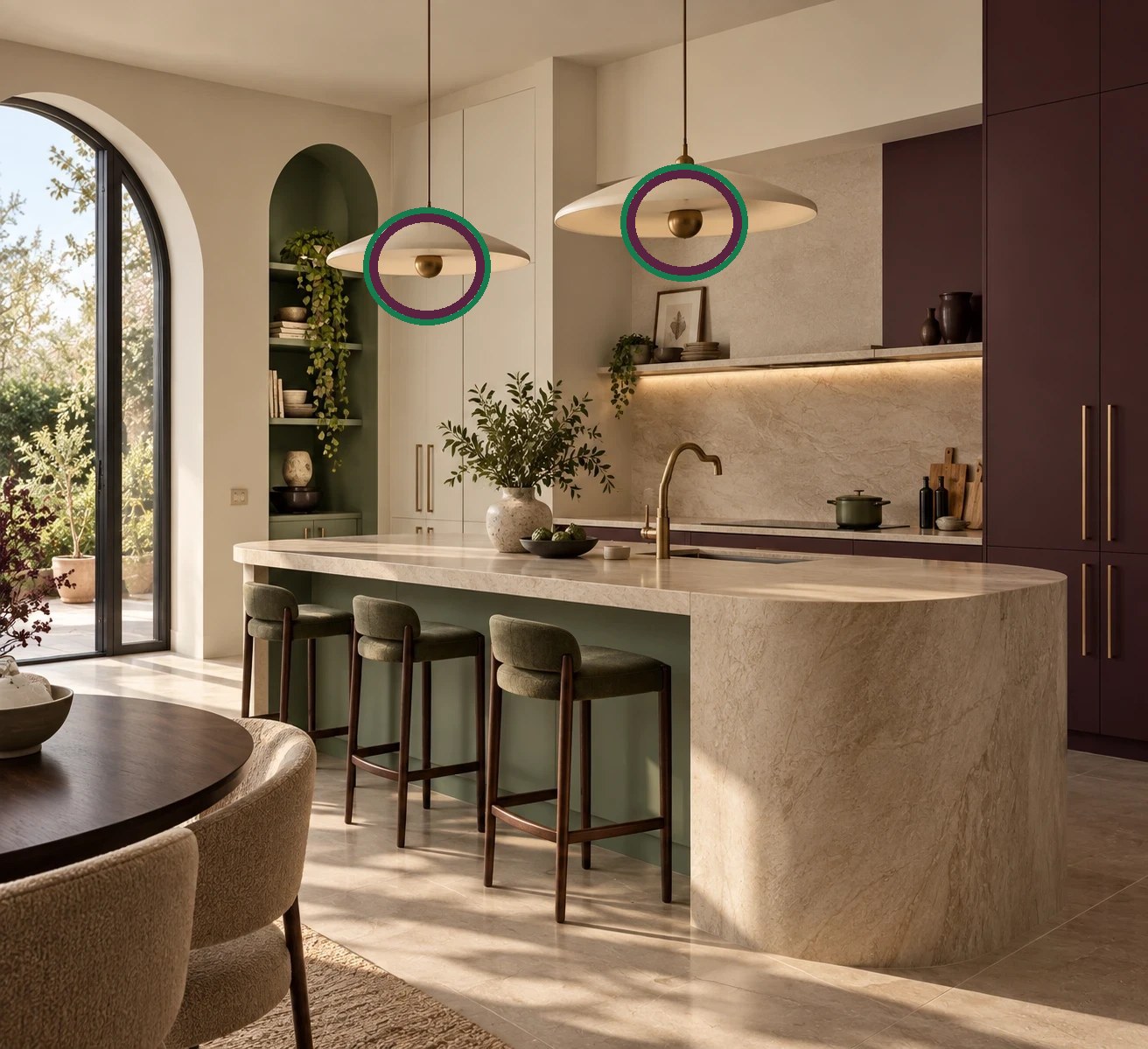
I Made These For This Post. Look Closely.
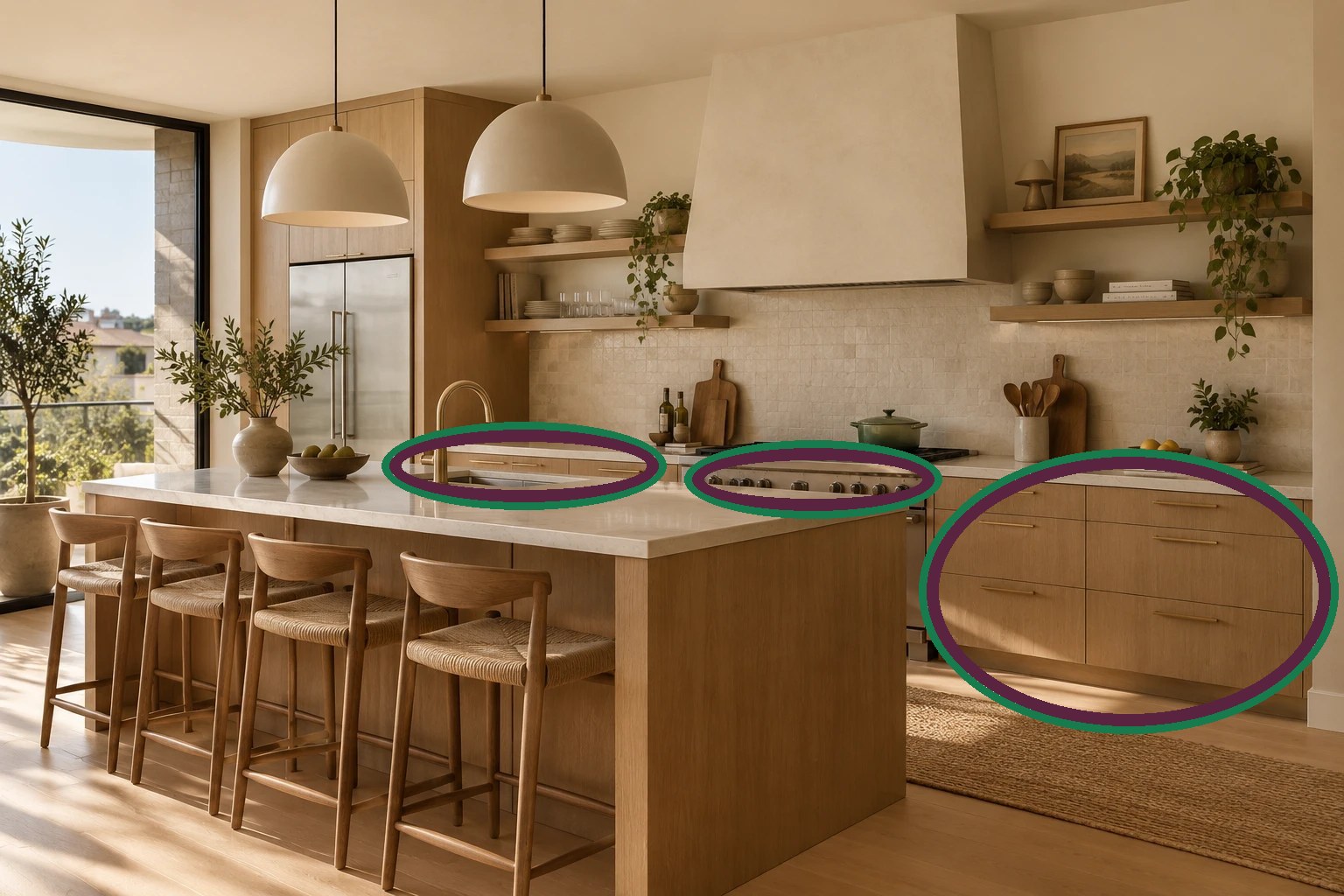
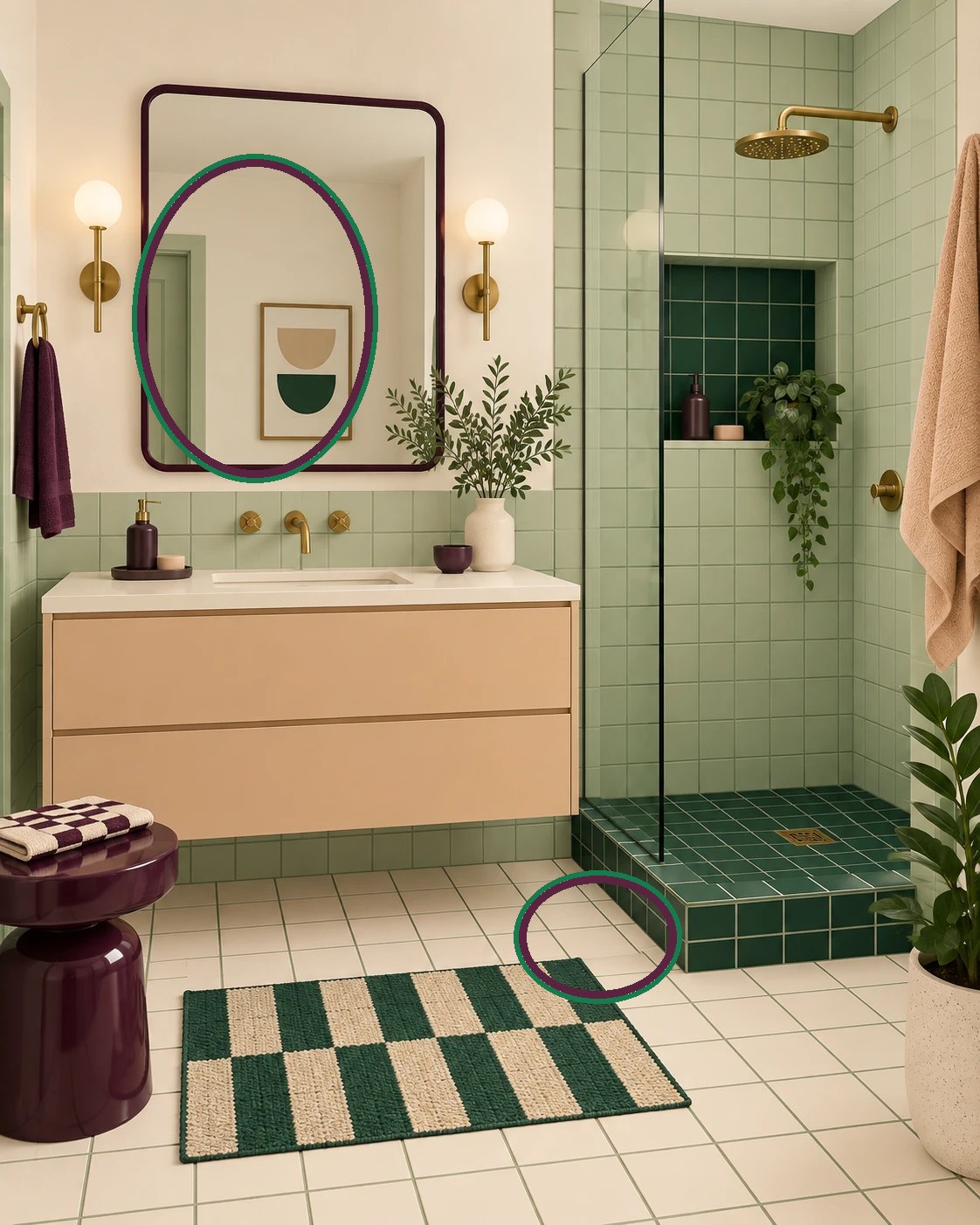
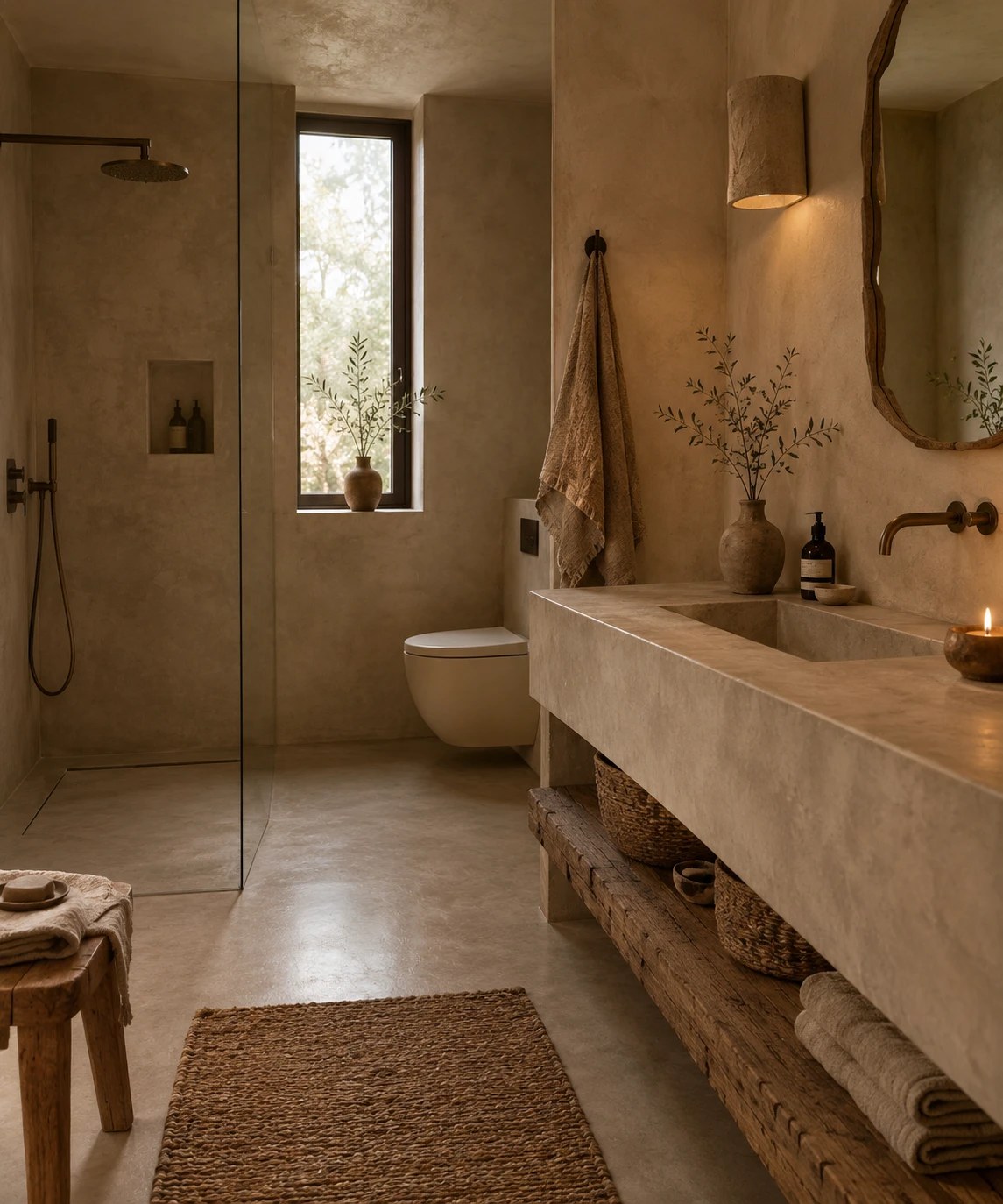
Every picture in this part I made myself, with AI, so you can see exactly what I mean. And here is the part nobody tells you: it is fun for the first ten minutes and then it gets frustrating. You type, you wait, you get something that is almost right, you type again, and you lose the thing you liked in the last one. The oak kitchen took one try. The bathroom took four, and even the closest one is still not right. You will restart, and restart, and restart, and at some point you are fixing the picture in your head instead of on the screen.
And if you really want to see it struggle, ask for a mirror. AI almost always gets the mirror wrong, and honestly that is the real struggle. The reflection shows you a room that isn’t the one you are standing in: a print that is not on the wall, a door that does not exist, a window on the wrong side. Once you notice it you cannot un-notice it, and you will find it in half the pictures below.
And you need patience. A lot of it. It is like repeating the same sentence over and over, twenty times, a little differently each time, and the answer still comes back slightly off. Not wrong, just off. The tap moved. The stool changed. The thing you fixed last time is broken again. After the tenth try you start to wonder if it is you. And here is the part nobody mentions: every one of those tries costs you. AI charges you tokens or credits for every picture it makes, including the wrong ones. It gets it wrong, and you pay for it to get it wrong.
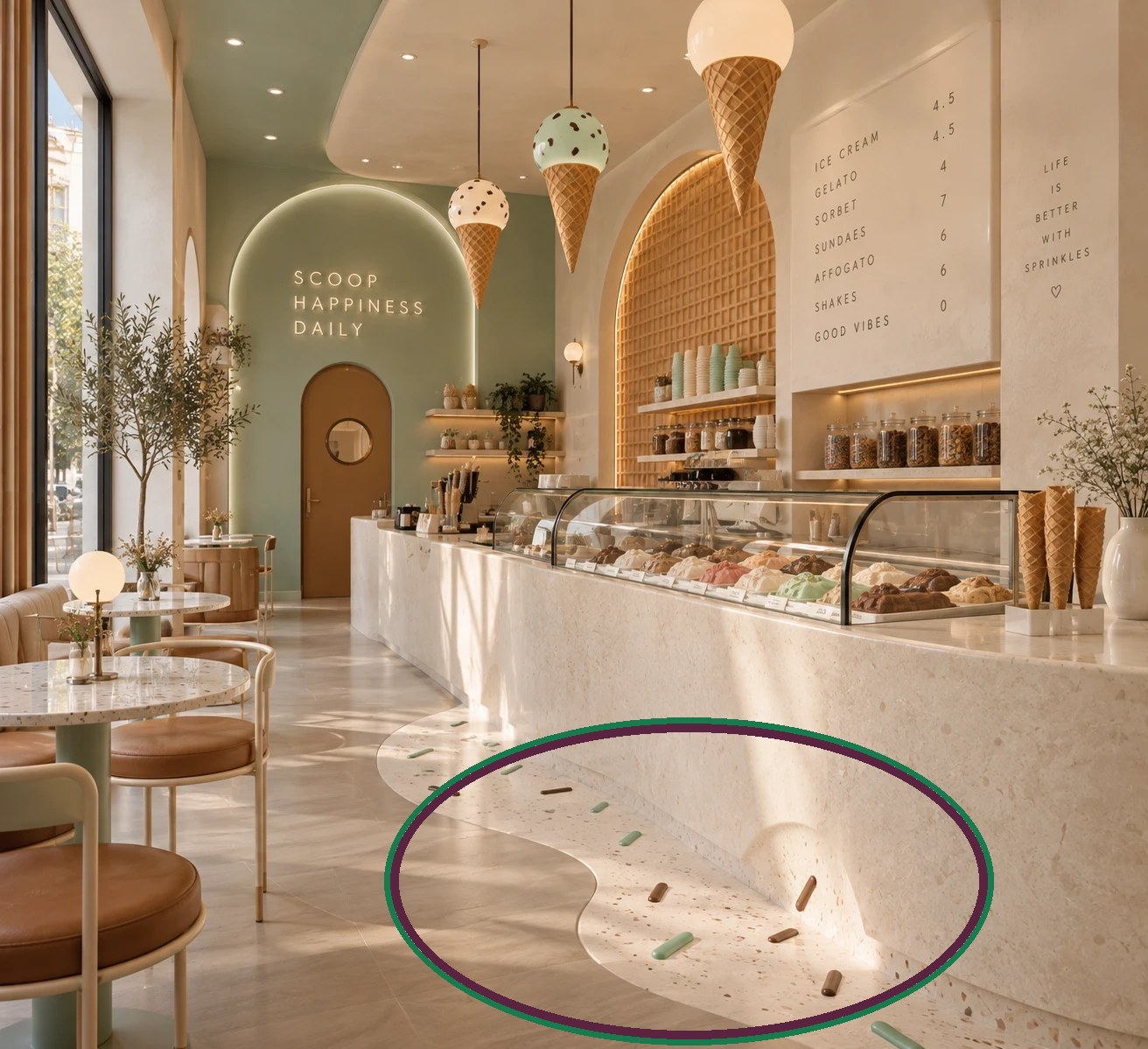
So enjoy them, they are pretty. Then look at the details. I circled a few of the obvious ones.
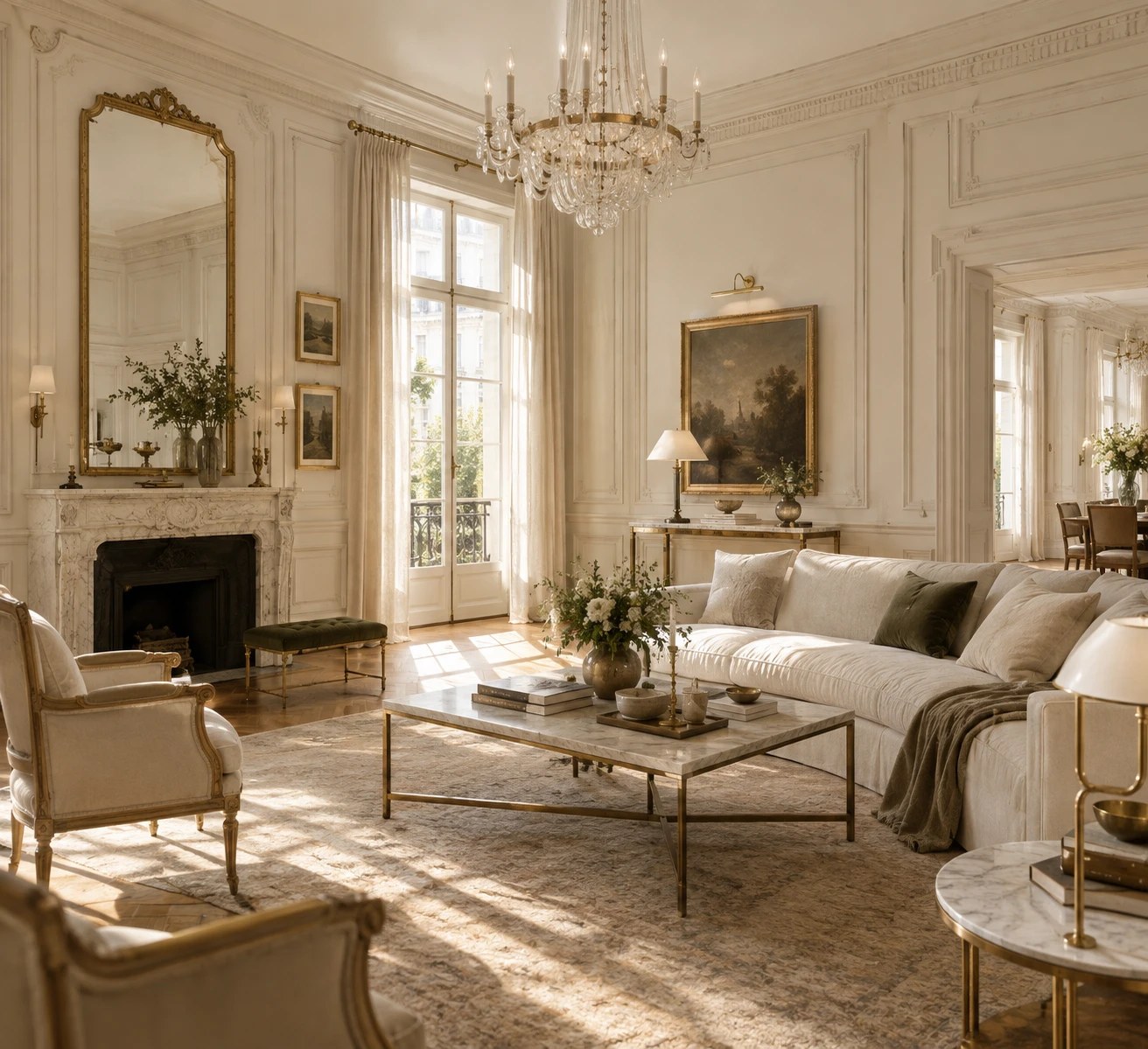
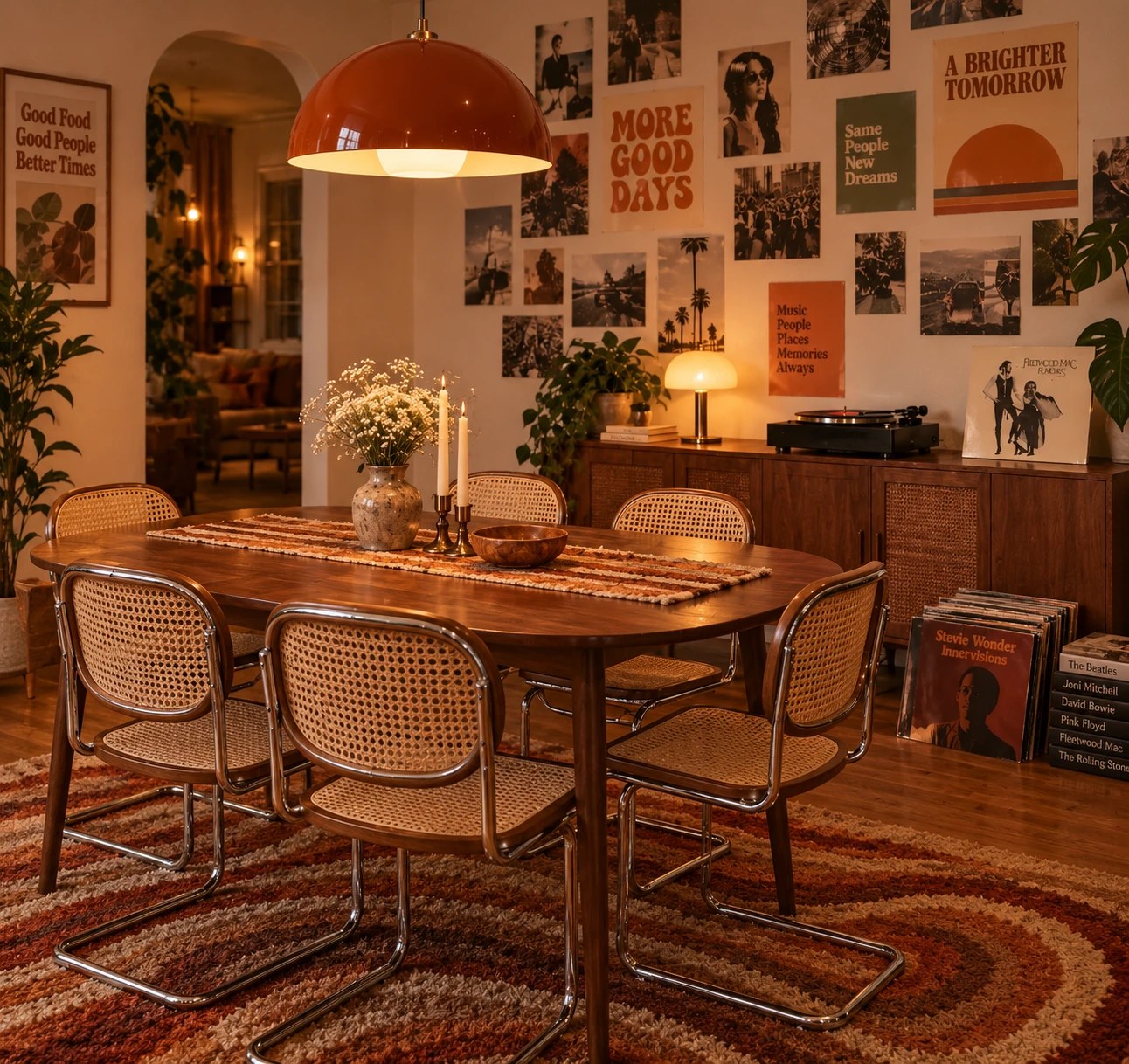
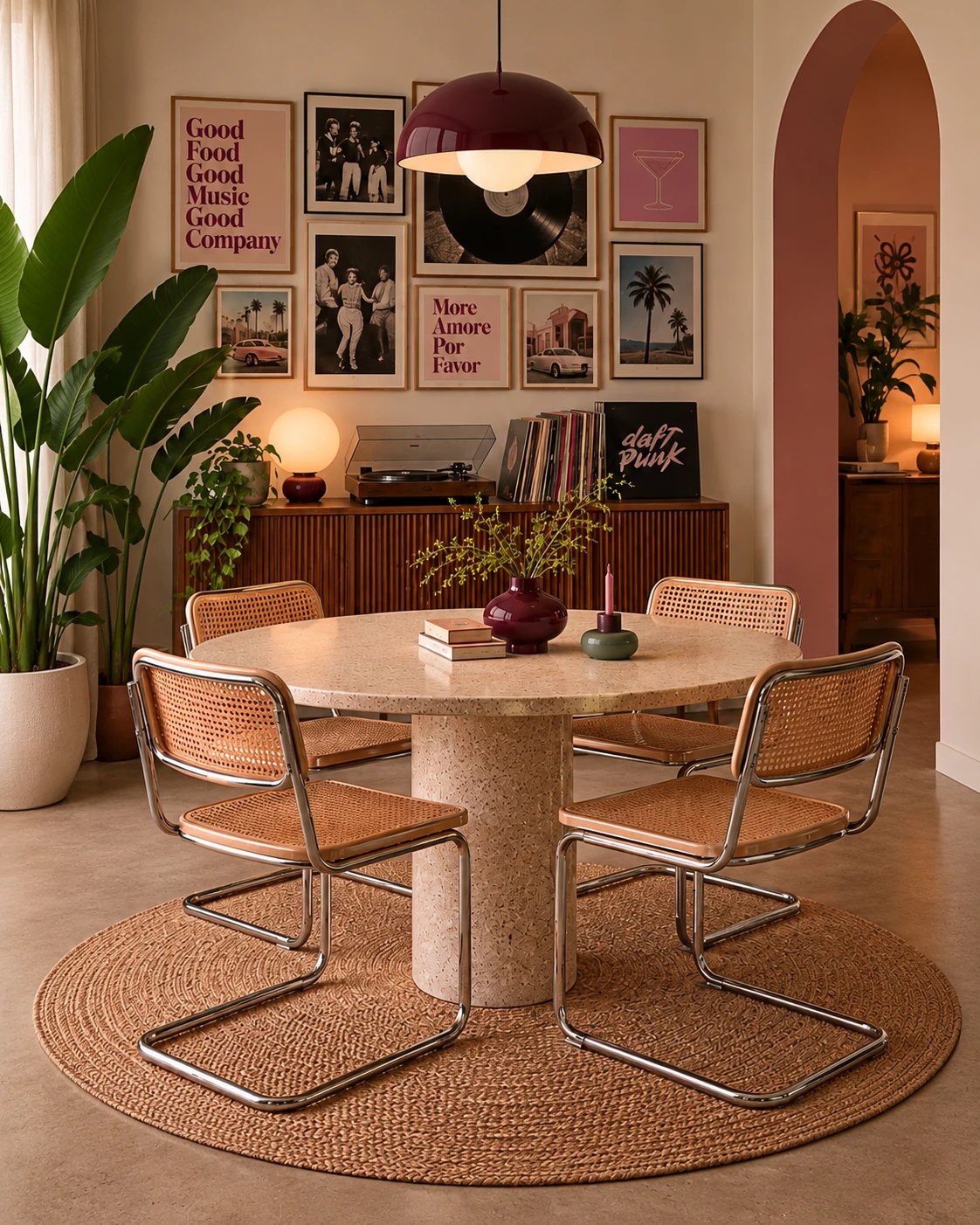
And here is the “every picture is a different room” problem in real life. I refined one green kitchen for a good while. Same brief every time, one thing changed each time. Here are two of the tries, in order:
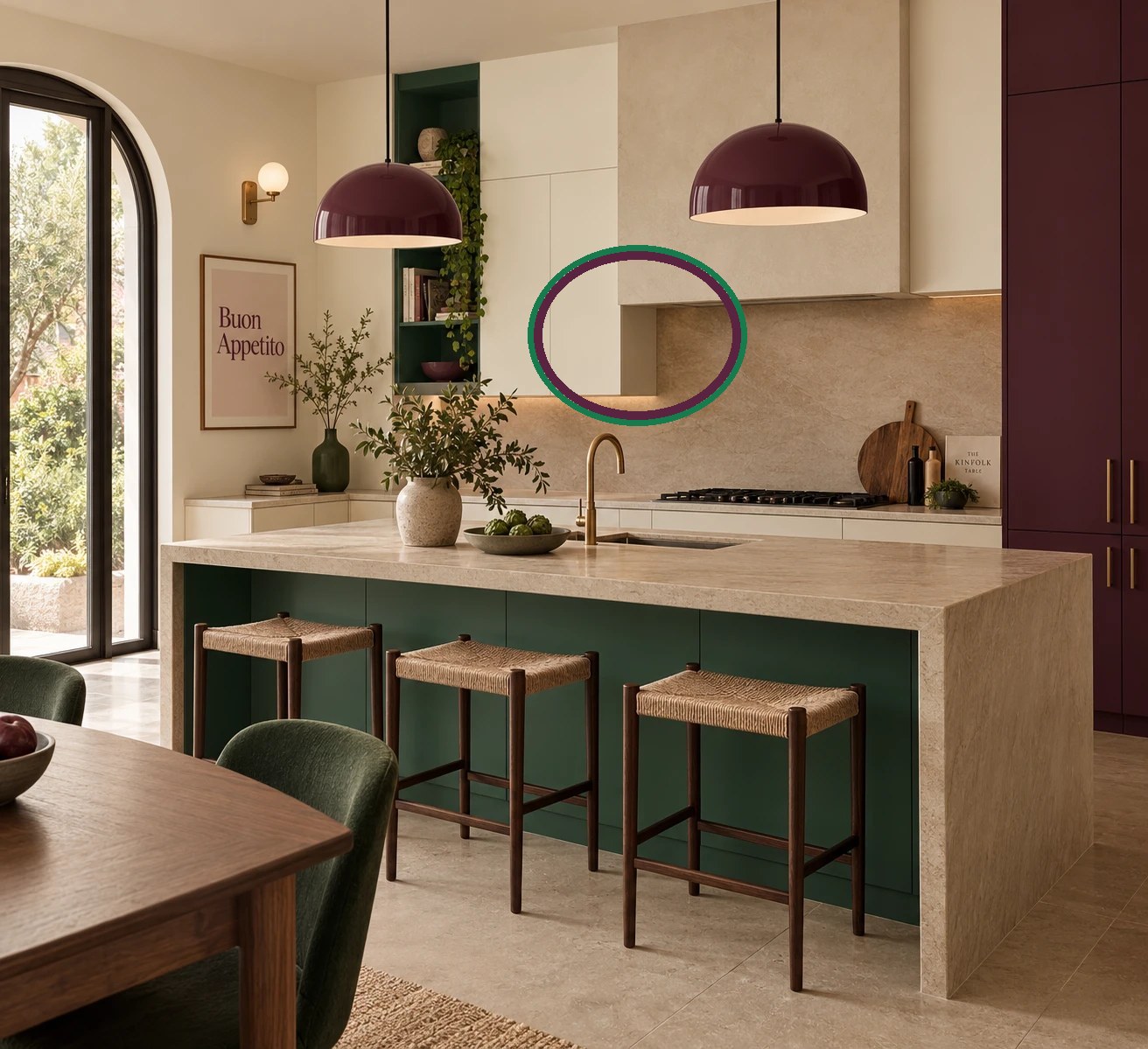
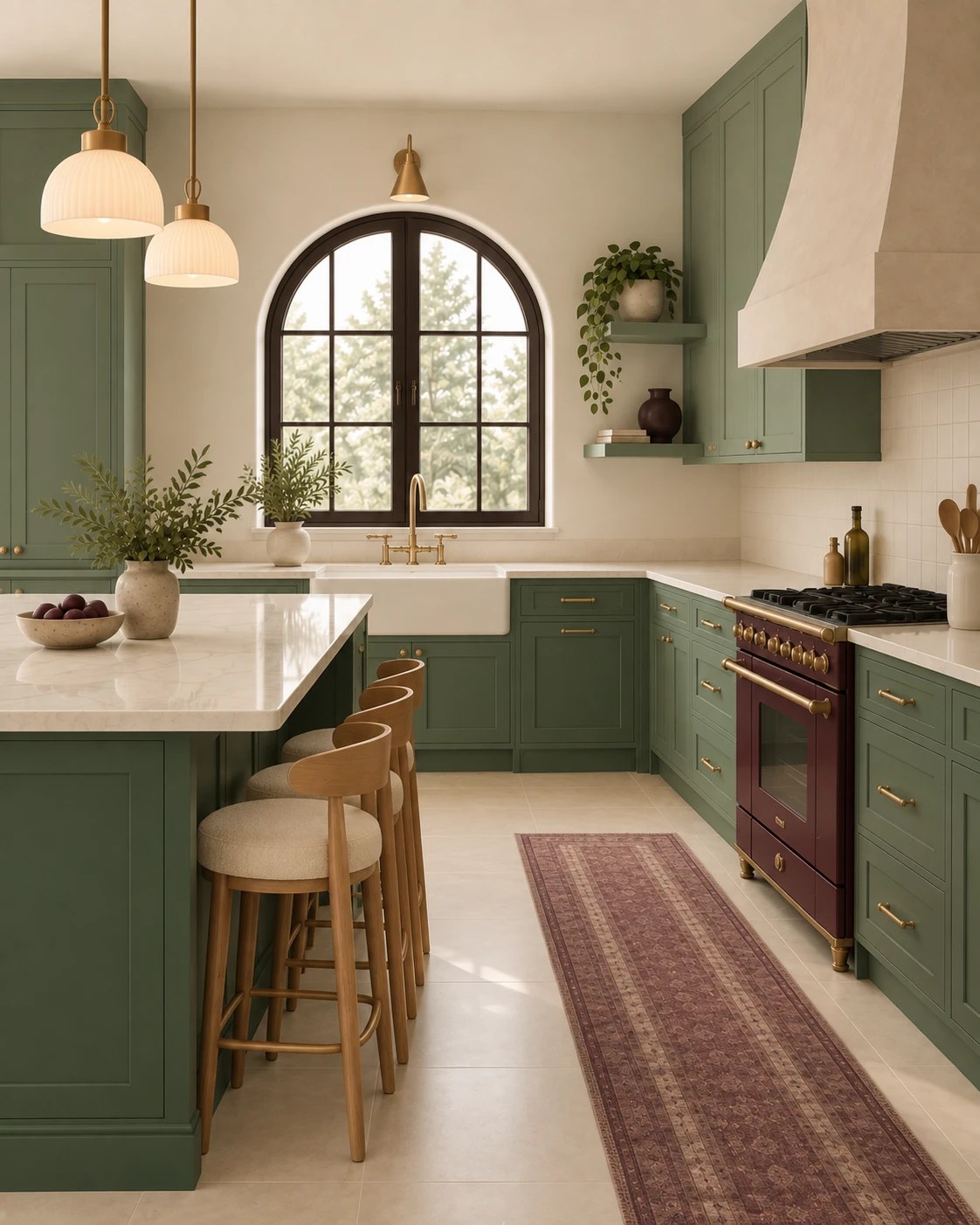
Two tries, two kitchens. The second one is not the kitchen I asked for. That is what “the same kitchen but…” gets you.
And sometimes you just have to laugh at it. I asked for an ice cream shop.
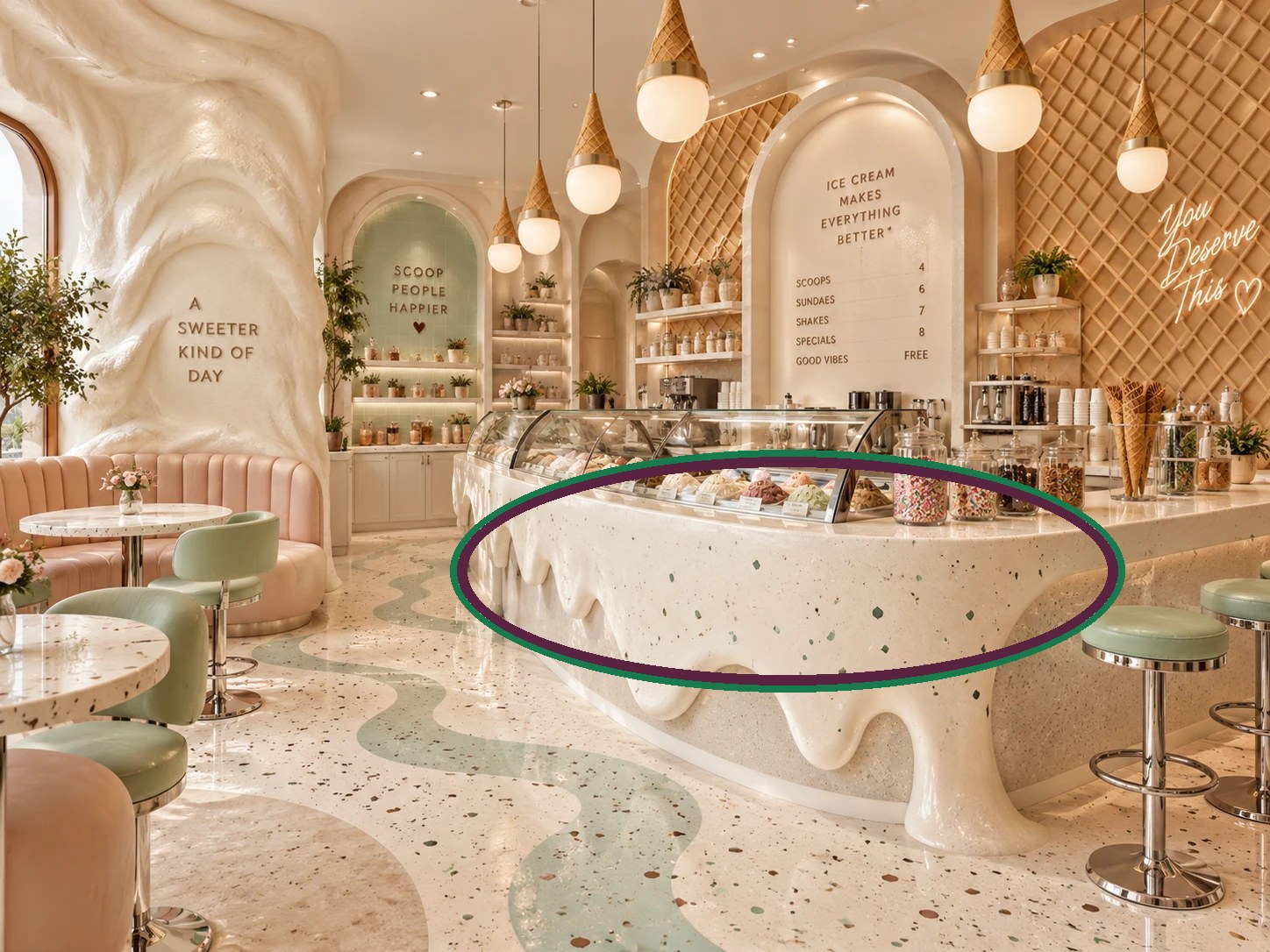

And to be fair, when AI is good, it is really good. I asked for a Parisian bakery and got these two, and honestly, I love them.
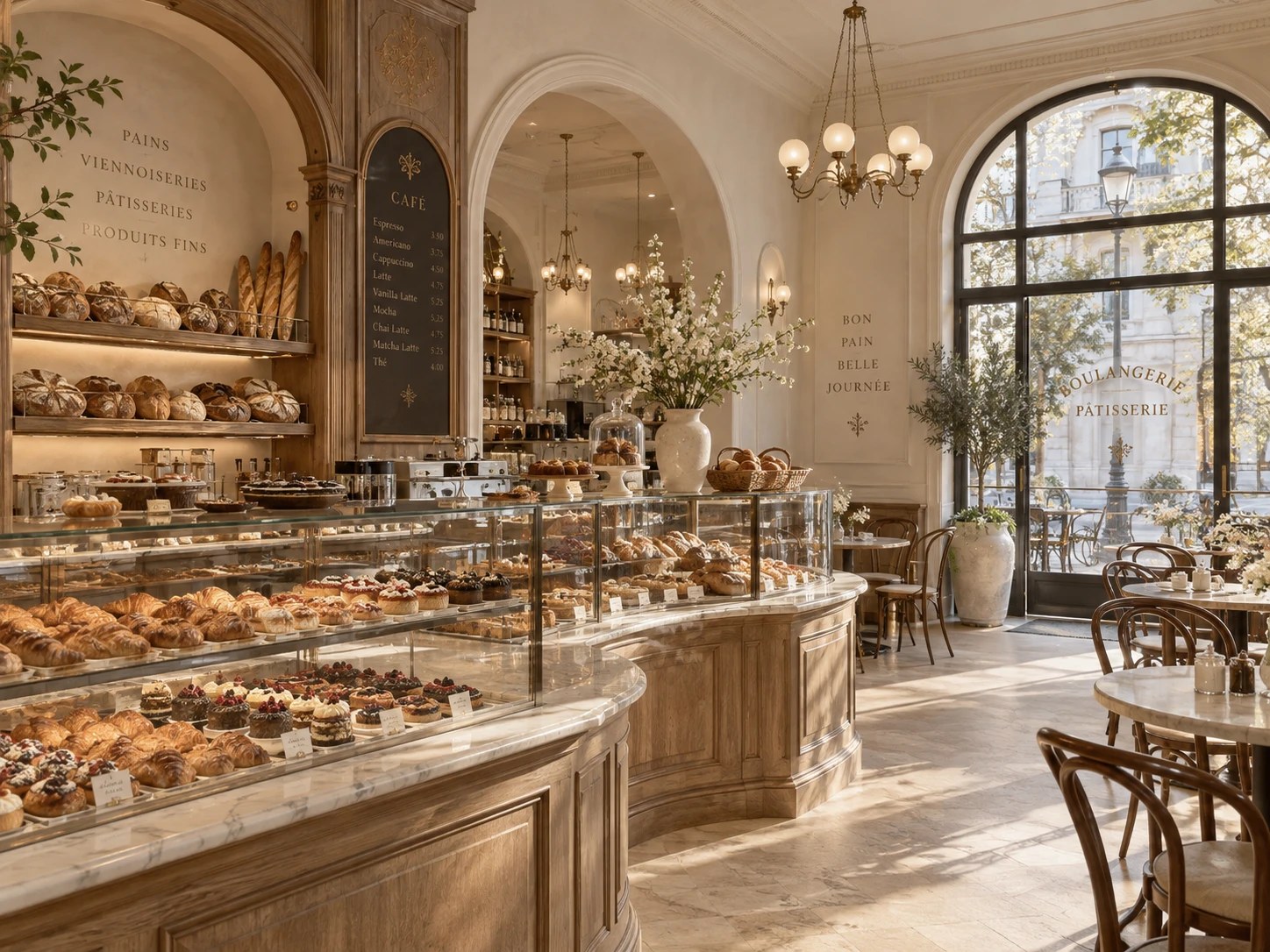
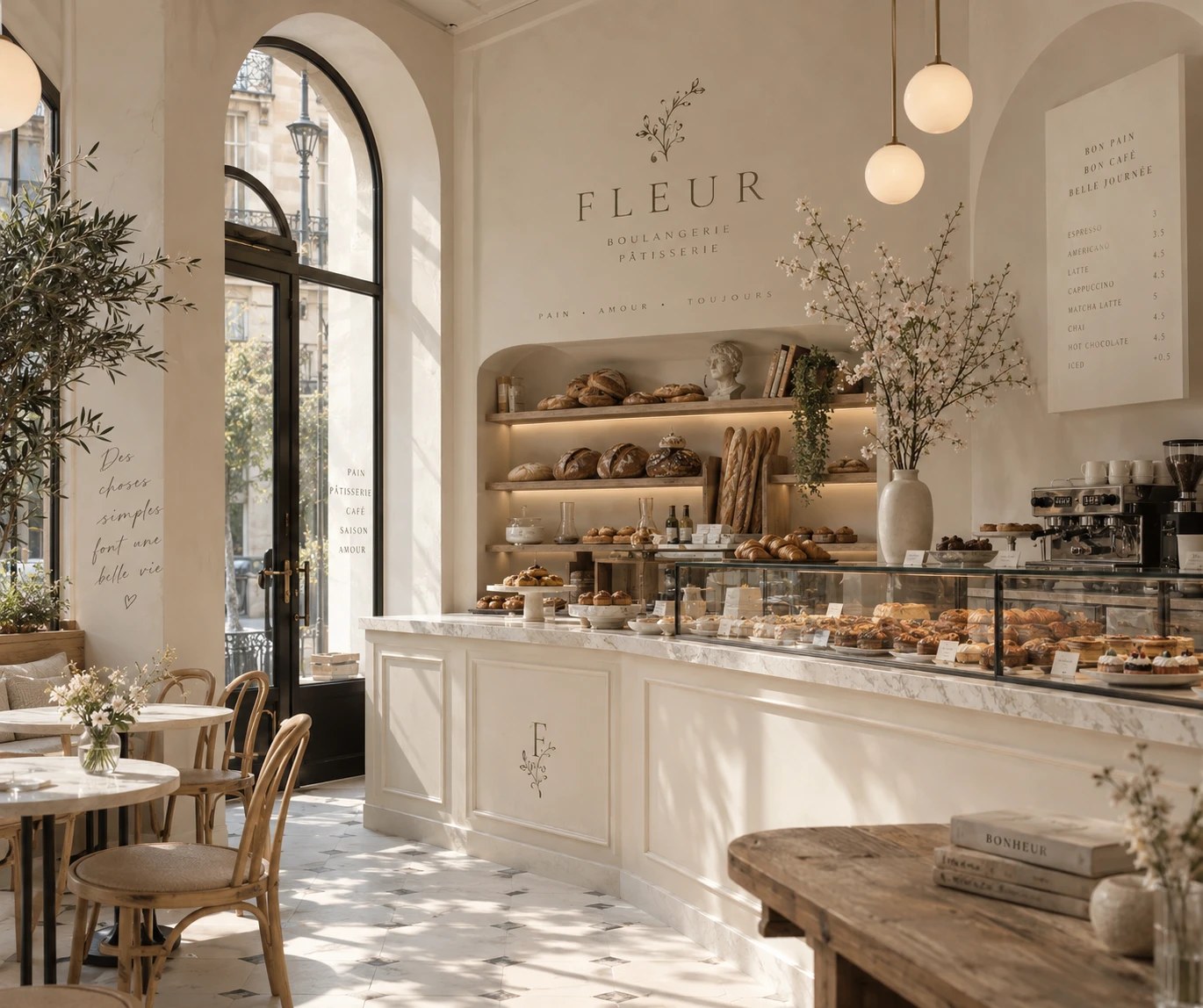
They are a great start. But getting every single detail exactly how we want it? That would be impossible.
That is the thing to remember. AI gives you an initial look, something to build off of. It is not the design, and it doesn’t have to be. Enjoy it, laugh at it, and then hand it to a person who can make it real.
None of this is a reason not to use it. It is a reason not to build from it. AI doesn't know that a pull needs to line up, that a candle in a shower goes out, that a toilet needs room for a person. It knows what a nice bathroom looks like from far away. Up close is my job.
Getting A Picture Is Easy. Getting The Picture Is Not.
Yes, it is easy to get an image. Anyone can get a pretty room in thirty seconds. Getting it exactly how you want it is a completely different story. It takes many, many repetitions, and there is a way to tell it what you want. That is the part people don't see. You don't say "nicer bathroom." You say fluted vanity, bullnose edge, unlacquered brass, a chair rail at a third of the wall, warm white not cool white, the light from the left. We know what to tell it because we went to school for it. That vocabulary is the whole job, and it took years to get.
And I'll be honest, that part AI will learn. It already has, mostly. Give it a few more years and it will know every word I know. But that is knowledge, not taste. Good taste and talent are natural. You have them or you build them over a lifetime of looking, and for an AI to have that off the bat would surprise me. Every designer has a look, a stamp, a signature. You can spot a room by a designer you love before anyone tells you who did it. I'm not sure AI has that, or ever will, because it is made from everybody's rooms at once and belongs to nobody.
So if you like a designer's look and style, the honest advice is: go with them. Not with a picture of something that looks a bit like them.
And one more thing about the pictures. With AI it never feels finished. It never feels complete. You get to “yeah, good enough” and you stop, because the twenty-first try is not going to be the one. Good enough is not what we do at Astratto Design. We are not in the good-enough business. What we strive for is the moment a client looks at the finished room and says “this is better than I could even imagine.” I have never heard anyone say that to a picture.
Why Use A Person
We know your actual house. We work from your measurements, your photos, your floor plan. The rendering we make is your room, with your window where your window is. That is the whole point of a rendering, seeing it before you build it.
Real products, real prices. Everything in our designs can be bought. We give you a shopping list with the item, the supplier, and the price, so the picture and the invoice match. (If you want to see what that looks like, the catalog on our sourcing page is a real one.) And I love what the 3D studio avocado.RENDER did with the coral kitchen below, those glossy rounded tiles and the little arched sconces!

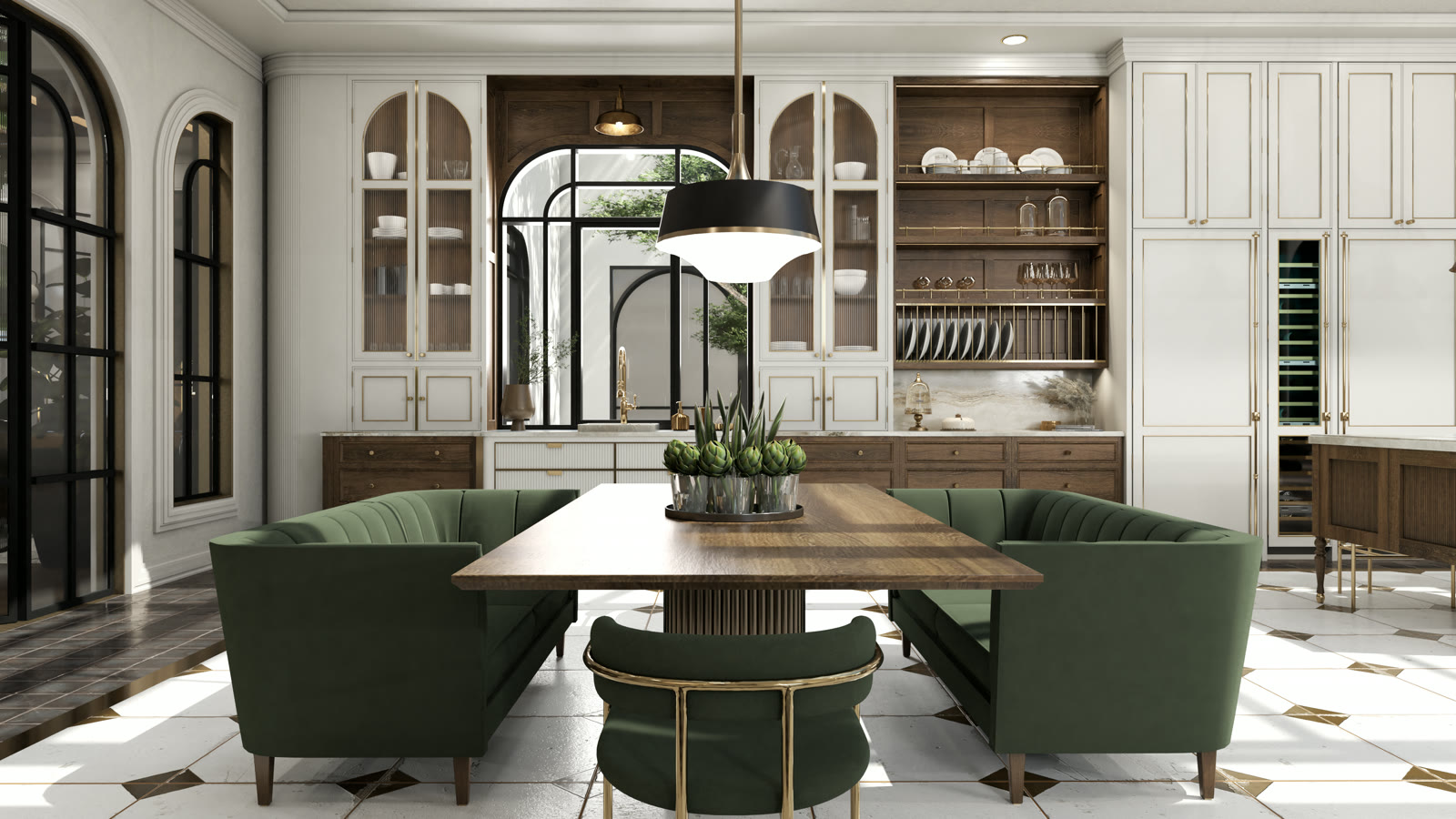
Kitchens and bathrooms are where pretty falls apart. I have a degree in interior design and a kitchen and bath certificate, and I got that certificate because those are the rooms where a lovely picture turns into a plumbing problem. Clearances, venting, where the water is, what the counter is actually made of. A person checks that. A picture doesn't. (The green striped bathroom below is in a house in Hove, one of SHOOTFACTORY's locations, and I would move right in.)

We hear what you didn't say. A client tells us "modern" and sends ten pins that are all warm and soft and a little bit country. That gap is where the good design is, and a conversation finds it. A prompt can't. Take that curvy wood cabinet with the speckled stone top and the rounded cream cupboard above it: someone might call it modern, but what they really love is warm, soft and a little bit retro.

Your Pinterest board tells me things you haven't noticed. This is why Pinterest is still super important to us, even now. When you send me your board I am not just looking at the rooms, I am looking at what keeps showing up. The same arch in five different kitchens. Curves everywhere, and not one straight-edged sofa. Olive, olive, olive. A certain kind of light. People pin what they are drawn to without realizing it, and a human can see the shapes, the colors and the mood you are leaning towards before you could put it into words yourself. Can AI do that too? Maybe, a little. But we can't fully trust it with that yet, and honestly it is my favorite part of the job. If you don’t have a board yet, make one on our site from the pins I have already narrowed down, or start with the style quiz.
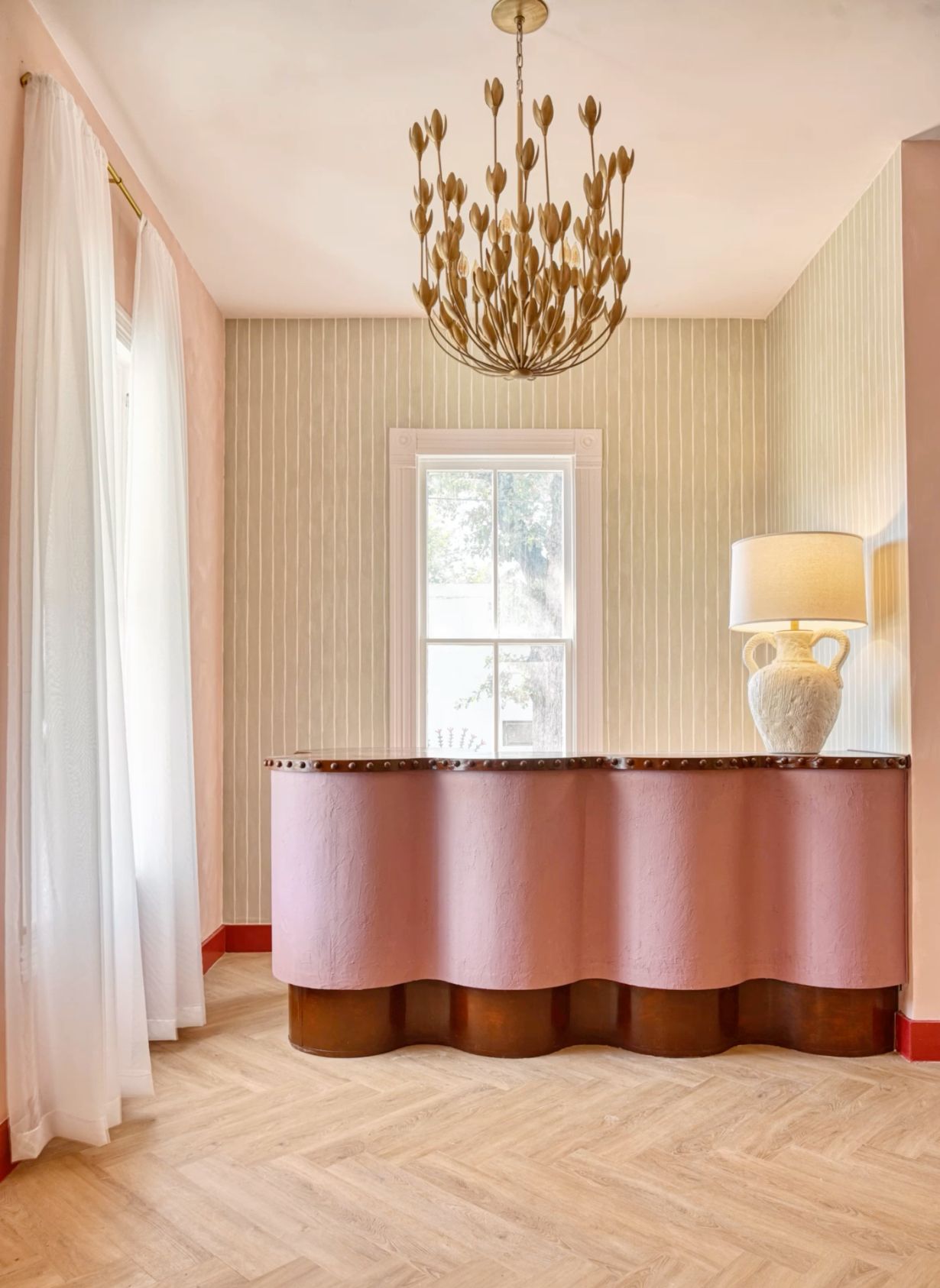


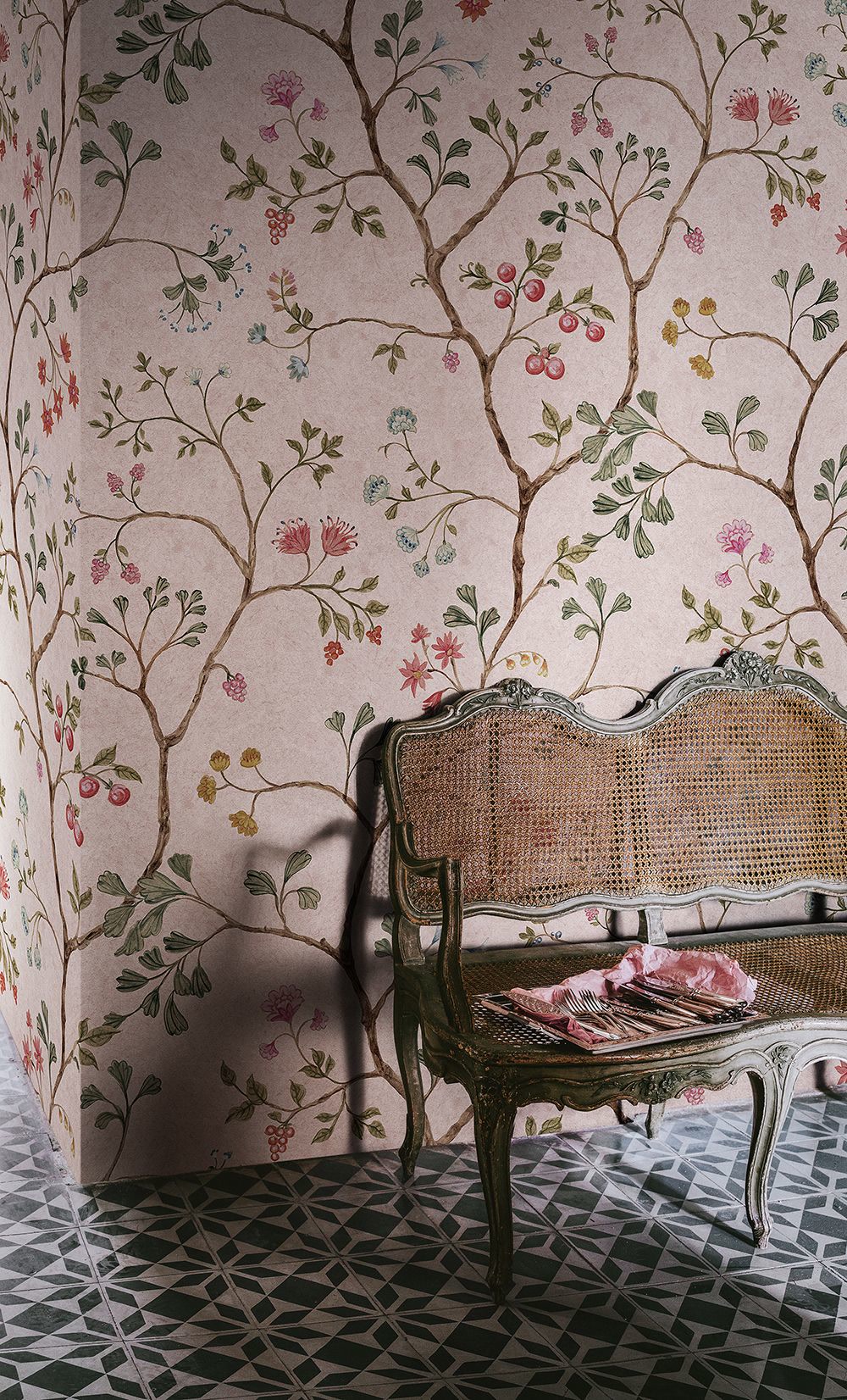


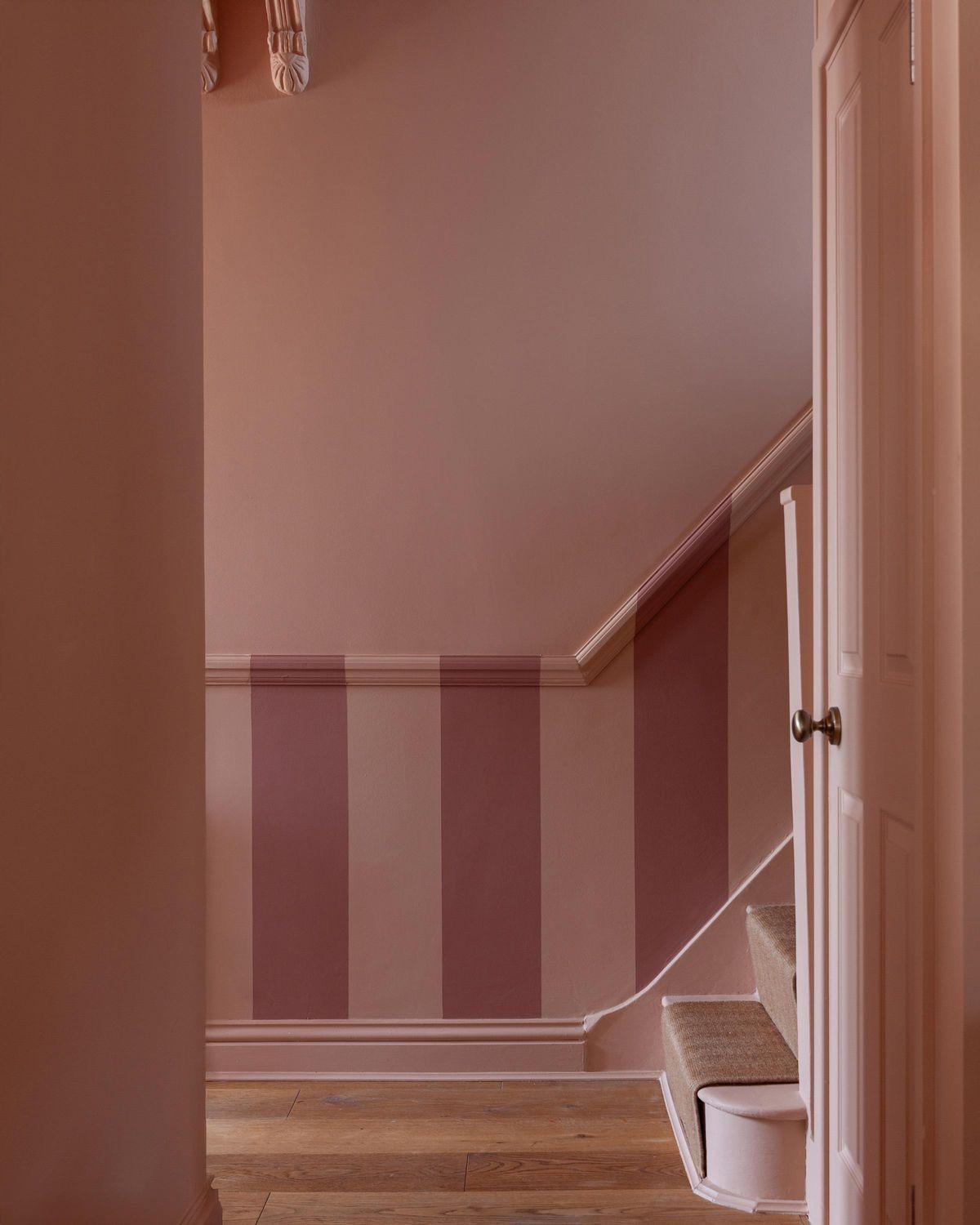


Pictures via Pinterest, from our board
With permission: Photo: Lainie Sanders, Euphoria Collective (@euphoriacollectivestudio). · Photo: Rebel Walls, Song Tree wallpaper in Pink Cherry (@rebelwalls). · Photo: Hello Flora (@helloflorauk).
One person to call. If something is off, you email us and we fix it. Two rounds of changes are included in every project, and you always know who you are talking to.
What A Designer Actually Hands You
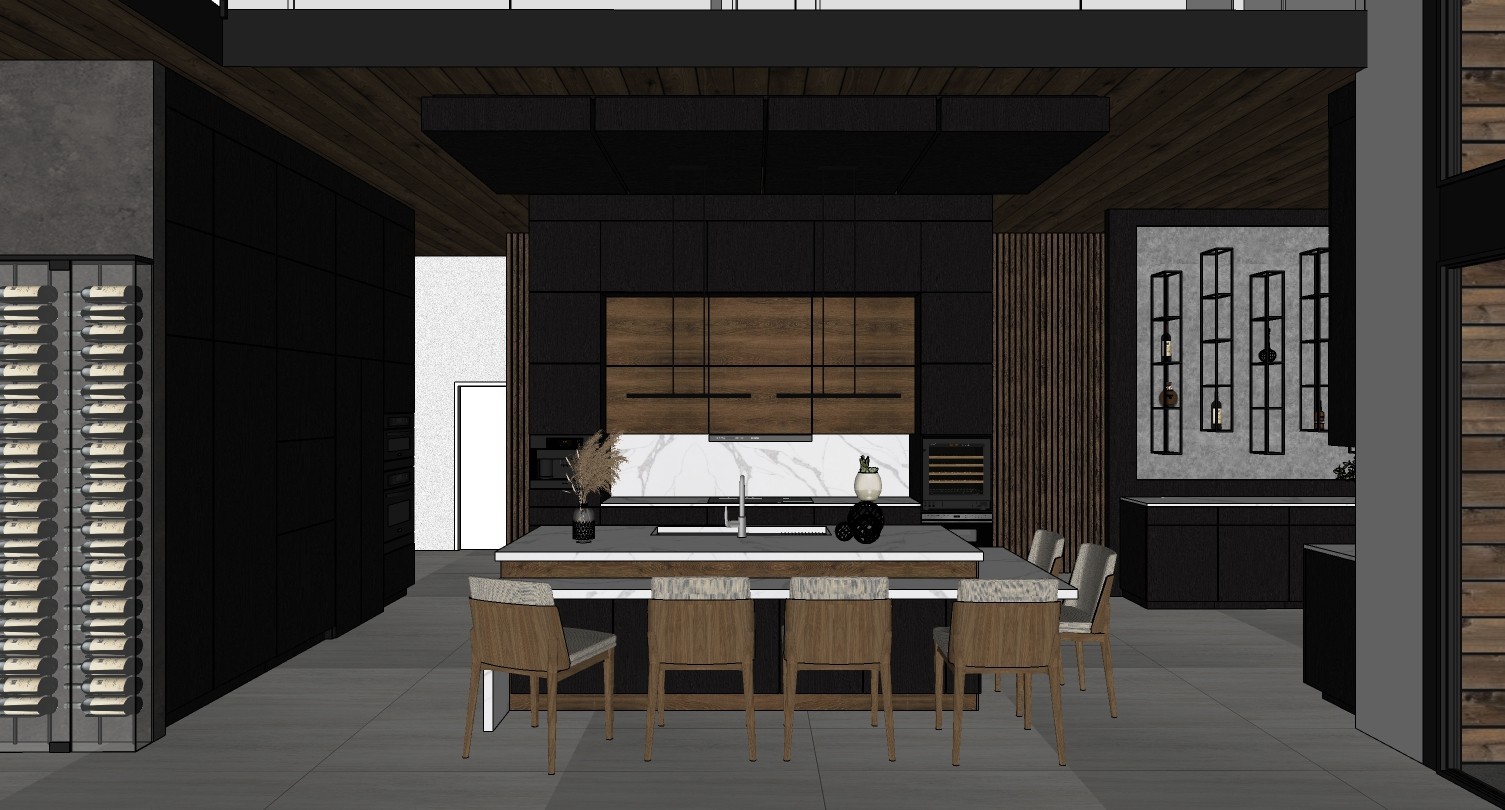
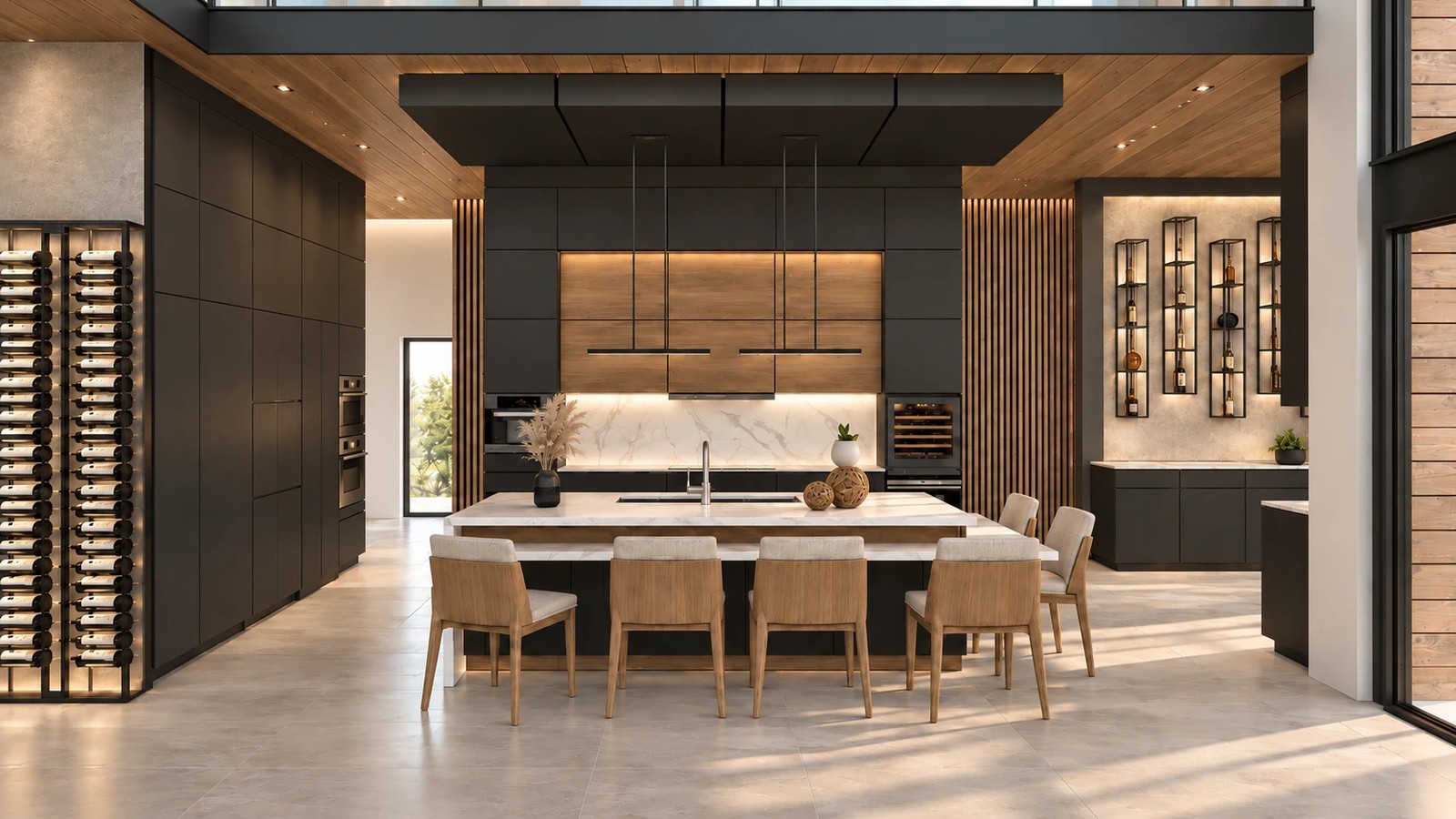
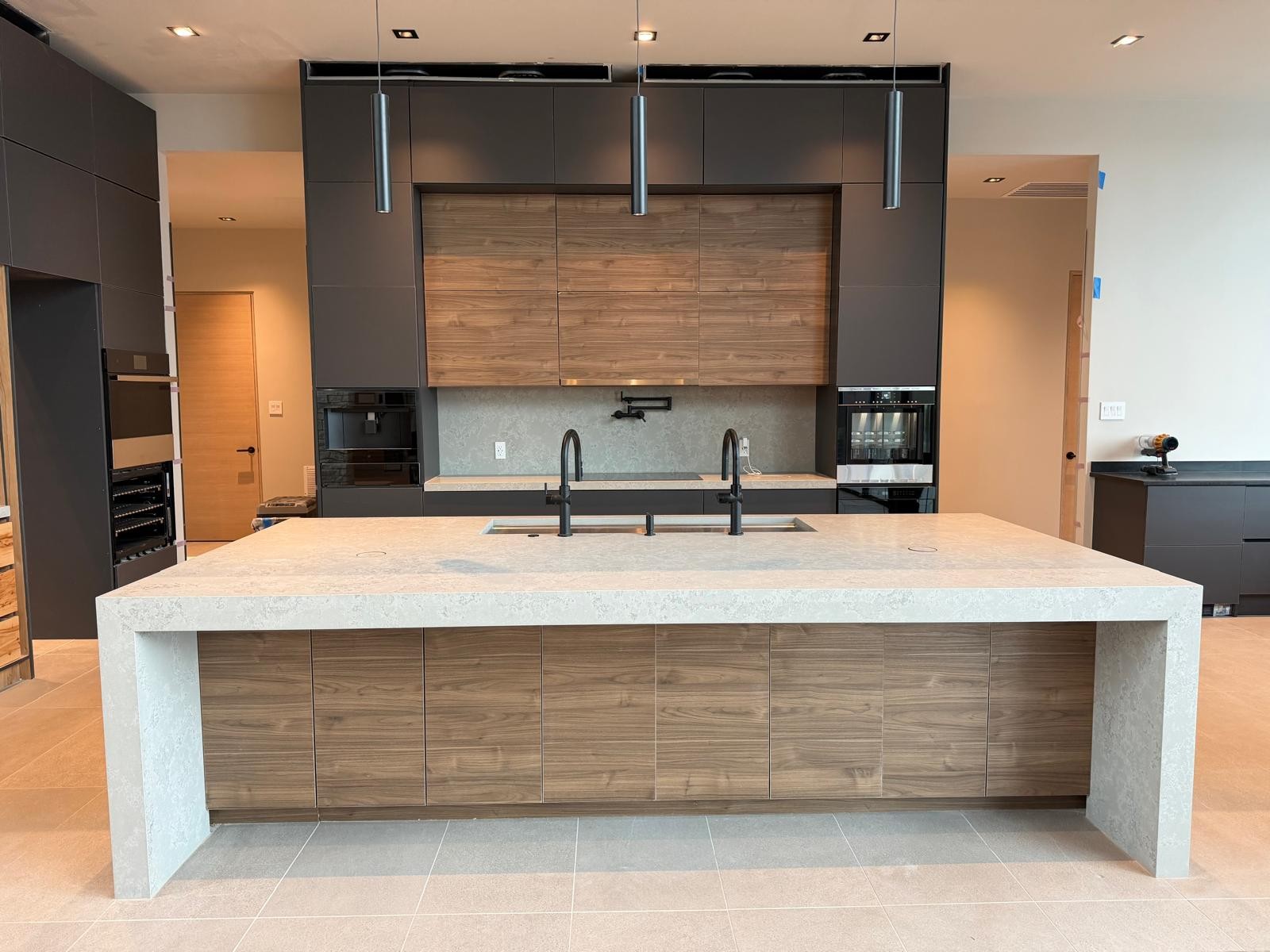
Since we are showing pictures, let me show you ours. Not a mood, a set of documents you can hand to a contractor and a shopping list you can hand to your credit card. This is the part AI does not make, and it is the part that turns the dream into a room.
Here is one real project, start to finish: the Mannapov kitchen in Texas.
But Here Is The Problem With A Person
Let's be fair, because it goes both ways.
We are slower. A first draft from us takes about two weeks. AI takes ten seconds. If all you want is to see ideas, we are not the fastest way to see ideas.
We cost money. There is no way around that. A fixed fee, and you know it before you start, but it is a fee.
We need you. Measurements, photos, answers to our questions. If you don't have time to be involved at all, a person is a harder fit than a website.
You get our taste, filtered through yours. That is usually the value, but it is also a limit. AI will happily give you forty directions. We will give you a point of view.
What The Research Says: People Dream With AI, Then Hire A Person
Here is something I see every week. A client sends me a folder of AI pictures, sometimes dozens of them, and says "something like this." And then they hire me anyway. Not because the pictures were bad, but because a picture can't measure a wall, order a vanity or tell a plumber where the drain goes. It turns out it isn't just my clients. The research says the same thing.
80%
of renovating homeowners still hire a professional
even though 1 in 5 now use AI on their project
What homeowners who use AI actually use it for
Gathering ideas
Picturing the design
Comparing layouts, products and finishes
Seeing what's possible for the space
Estimating costs
Planning the timeline
Permits
Understanding the contract
Source: Houzz State of AI in Construction and Design, 2026, a survey of 3,149 U.S. renovating homeowners on Houzz, June 2026. The bars are shares of the homeowners who used AI.
See every number and where it comes from
| What was measured | Result | Source |
|---|---|---|
| What homeowners actually do | ||
| Renovating homeowners who used AI on their project | 22% | Houzz State of AI, 2026 (3,149 homeowners) |
| What they used it for most: ideas, and picturing the design | 64% and 58% | Houzz, 2026 |
| Who used it to plan the timeline, the permits or the contract | 11%, 10%, 6% | Houzz, 2026 |
| Renovating homeowners who still hired a professional | 80% | Houzz, 2026 |
| Homeowners not using AI who said they'd rather have a professional's advice | 38% | Houzz, 2026 |
| When their pro used AI, homeowners who said it helped them picture the project | 76% | Houzz, 2026 |
| How people react to AI pictures | ||
| Real images vs AI images in ads: people preferred the business with real images, most of all for big decisions, and called AI images impersonal, less professional, less credible and possibly misleading | Real images won | Belanche et al., International Journal of Information Management, 2025 |
| People who want to know if an image was made with AI | Almost 90% | Getty Images VisualGPS, 2024 (30,000+ adults) |
| People who say authentic images are key to trusting a business | 98% | Getty Images VisualGPS, 2024 |
| What the pros say | ||
| Architects concerned that AI gets things wrong | 94% | American Institute of Architects, 2025 |
| Design and construction pros worried about the reliability and accuracy of AI, up from 33% a year earlier | 37% | Houzz, 2026 (601 businesses) |
These are what the studies found, not a promise. The image study tested hotels, restaurants and travel, not homes. Getty Images sells photography, so it has a stake in real pictures. Every number links to where it came from.
Look at that chart again. Homeowners use AI exactly the way I tell you to: for ideas and for picturing the mood. Then, when it gets real (the timeline, the permits, the contract), almost nobody uses it, and four out of five hire a professional. AI is where people start. It is not where they finish.
And the image study explains why. When the decision was a big one, people trusted real images over AI ones, and one of the reasons they gave is the same one I give you: an AI picture makes it harder to picture what you are actually going to get. A rendering from us is the opposite. It is drawn from your floor plan, with products you can actually order, so what you see is what gets built. New York State has even warned homebuyers that AI pictures in home listings can misrepresent the property.
Notice the 76%, too. Homeowners like it when their designer uses AI. So do I. That is exactly how we work: the design is real first, and then AI helps it glow.
So Why Hire A Designer? Why Hire Us?
- Your AI pictures are welcome. Bring all forty. They show me what you love faster than any meeting could.
- We turn the feeling into your room. Your measurements, your windows, your ceiling height. Not a room the computer made up.
- Everything can be bought. A shopping list with the item, the supplier and the price, so the picture and the invoice match.
- Drawings a contractor can build from. Floor plans, elevations and millwork, so nobody is guessing on site.
- A rendering you can trust. Photoreal renderings of your real room. If something changes, the rendering changes with it.
- A person who answers. A fixed fee you know before you start, two rounds of changes included, and you always know who you are talking to.
The Beauty Of Using Both
So here is what we actually do now, and what we recommend to everyone who asks.
Use AI to dream. Use a person to decide.
Go play with the tools. Make the forty pictures. Find the two or three that make you feel something, and don't worry for one second about whether they are buildable. That is not their job. Then bring them to us.
We keep the feeling and we make it real. Same mood, same light, same warmth, but with your actual walls, products you can order, a counter that comes in that size, and a sconce that exists. We call this an accuracy pass, and it has become one of the nicest ways to start a project, because you arrive already knowing what you love. Half the work is done, and it was the fun half.
And we use it ourselves too. We have always worked on computers, our renderings are, as I wrote years ago, essentially a computerized drawing. AI is another tool on the desk next to the 3D model and the tape measure. It is very good at the beginning of a project and not much use at the end, and knowing that is the skill. (If you are a designer or an architect wondering where this leaves us, I wrote a post just for you.)
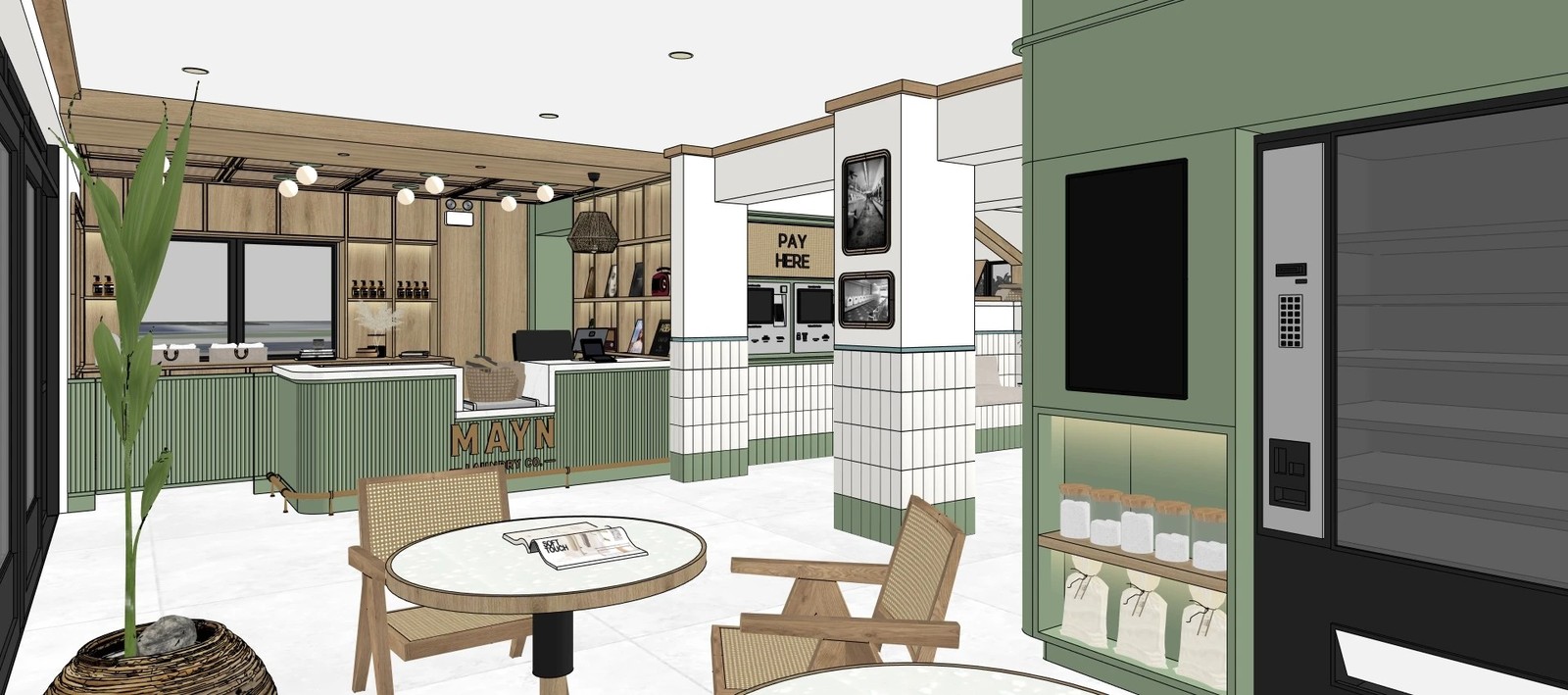
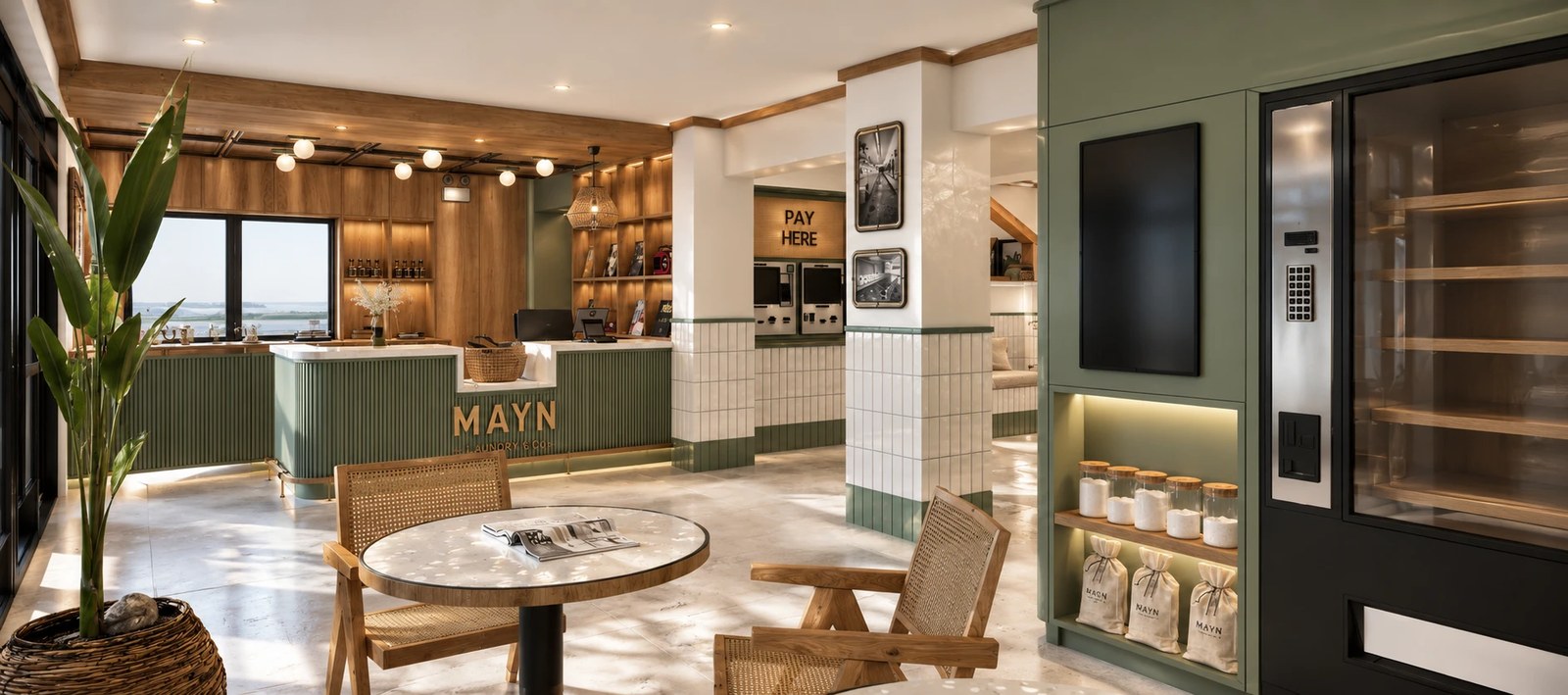
So a combination, AI and a designer together, that is the win-win. You get the speed and the ideas quicker than ever, and then you get a true final finish: correct measurements, the right products, and all the small details AI keeps getting wrong, the pull that lines up, the tap in the middle of the sink, the toilet you can actually sit on.
A picture gets you excited. A person gets you a house. You deserve both!
If you have an AI image you love and you want to know if it can be built, send it to us. We will tell you honestly, and if the real version won't beat your concept, we will say so before you spend anything.